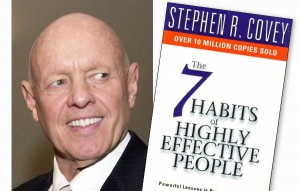
How Stephen Covey’s “7 Habits” applies to our financial life.
Im currently re-reading one of my all time favourite books, “The 7 Haibits of Highly effective people” by Stephen Covey and only just realised how applicable the lessons he teaches are about our lives generally but our financial affairs more specifically.
You see, I believe that all of the 7 principles Covey teaches in his book can be really effectively applied to our financial lives. Here’s the 7 principles together what I believe they teach u about managing our money
- Be Proactive
The first habit in “The 7 Habits” is to be proactive…and it’s an important lesson.
Whilst when it comes to investing being ‘too proactive’ can be detrimental, it’s also clear that we all need to take responsibility for your financial situation and ensure we’re taking action to improve it. Being proactive involves setting financial goals, creating a budget, and making a plan for achieving your goals…and this doesn’t happen with one clear thing.
Action!
- Begin with the End in Mind
The second habit in “The 7 Habits” is to begin with the end in mind. This means starting with a clear vision of what you want to achieve financially. This might include paying off debt but often we’re helping our clients with the ultimate financial ‘end in mind’….financial independence.
After all, financial independence allows us to do something really important…achieve independence of time as well as money so we can do what we want with the most finite resource we’ve all got.
- Put First Things First
The third habit in “The 7 Habits” is to put first things first.
This means prioritizing your financial goals and making sure that you are allocating your financial resources in a way that supports your goals. This may involve making sacrifices in the short term in order to achieve your long-term financial goals.
- Think Win-Win
The fourth habit in “The 7 Habits” is to think win-win. This means seeking out financial opportunities that benefit both yourself and others. I’d suggest that this could be applied to a wide number of things in your life relating to money including who you choose to work with (if you’re a business owner) or who you work for (if you’re an employee).
However I’d definitely suggest that if you’re working with a financial planner, you find one who has the same philosophy. One of the most important things to clarify when you’re working with a financial planner is they’ve got a win/win philosophy and are always acting in your best interests.
- Seek First to Understand, Then to be Understood
The fifth habit in “The 7 Habits” is to seek first to understand, then to be understood.
This might be taking the time to understand your relationship with money and the headspace to think about your goals.
However it also suggests that to understand more, it might be worth reading more broadly and widely when it comes to your financial plan.
- Synergize
The sixth habit in “The 7 Habits” is to synergize.
This means working together with others to achieve financial goals. This may involve collaborating with a financial adviser, joining a financial support group, or working with a partner or spouse to achieve shared financial goals.
- Sharpen the Saw
The seventh habit in “The 7 Habits” is to sharpen the saw. This means taking care of yourself and investing in your own financial education and development. By continuously learning and improving your financial skills, you can make more informed financial decisions and achieve greater financial success.
In conclusion, “The 7 Habits of Highly Effective People” offers valuable insights into how to achieve greater success and effectiveness in all areas of our lives, including our finances.
By being proactive, beginning with the end in mind, putting first things first, thinking win-win, seeking first to understand, then to be understood, synergizing, and sharpening the saw, we can build a strong financial foundation and achieve our financial goals. By incorporating these habits into our financial plan, we can take control of our finances and build a secure financial future.