Don’t avoid death. Face it and change your life, in the next chapter, for the better because of it.
There’s a fatal inevitablility with reaching our 50s and 60s.
We’ve often built our wealth to a point where work becomes more optional, we probably know more than ever before what we like and what we don’t, and you’re probably recognise what you like to spend your time doing more than previously.
But the brutal reality is that we’re closer to death than ever before.
But what if I told you that thinking about our own impending deaths doesn’t need to be depressing but can empower us to live the lives we truly deserve.
That’s why in this blog, considering our own death can be depressing and why the stoic tradition of Memento Mori and the questions we ask ourselves can allow the next chapter of our lives to be the best one yet.
There’s an uncomfortable truth you and I would probably rather ignore.
I’ve personally started to think about it a lot more often recently… and before you mention it in the comments, it’s not the growing number of grey hairs or the need for reading glasses all the time.
It’s the fact that we’re closer to death than we’ve ever been.
It sounds obvious of course as we’re closer to death with every passing day but when you get into middle age, we tend to have a lot more experiences of death a lot closer to home.
I know that losing my mum early in 2019 has made me think about death differently, but also the fact that we also lost a family friend in their mid 50s quite recently made us think about death in a different way too.
Clearly there’s a lot of grief when you lose someone you love, but the strange irony is that for many, this is also the chapter when life becomes richer. You’ve worked hard, you’ve built wealth, you’ve accumulated experience, you know what matters to you. In some ways, you’re freer than ever.
And yet the shadow of mortality lingers.
Here’s the thing: avoiding that truth doesn’t make it go away. Pretending death is far off, irrelevant, or something you’ll think about “later” only makes the fear fester. But facing it? Staring it directly in the eyes? That can change everything.
You see facing death might be the most life affirming move you can make.
Modern Western culture often conditions us to avoid the subject of death.
But this avoidance has a cost.
If you never think about death, you also never fully think about life.
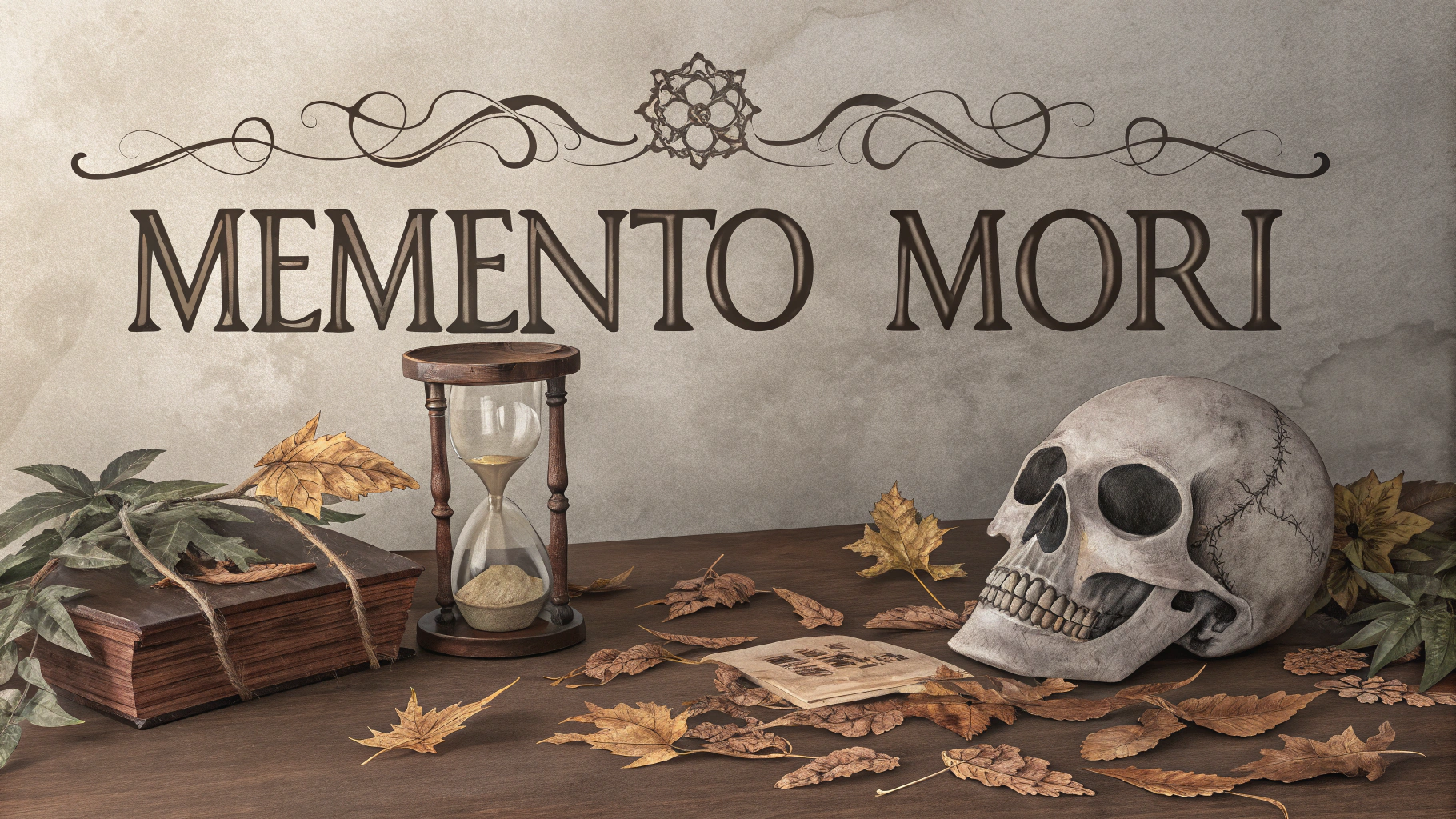
The stoics knew this well. They had a simple phrase for it: Memento Mori – “remember you must die.”
This wasn’t meant to be morbid. It wasn’t pessimistic. It was a call to arms.
The Roman Emperor Marcus Aurelius wrote:
“You could leave life right now. Let that determine what you do and say and think”
You see the stoics believed, as I do and maybe you should, that when you remember that time is short, you stop wasting it on things that don’t matter.
You stop putting off the adventures, the conversations, the acts of courage you’ve been saving for “someday.”
Facing death is not about being gloomy. It’s about being urgent. Being alive. It’s about taking action you might have been putting off…
Here’s where facing death becomes practical and I think there’s three really practical questions you might want to ask yourself…
Firstly, if I had 5 years left, would I still be doing what I’m doing right now?
Secondly, if I had one year left, what would I prioritise? What would become way more important and what would become immediately insignificant?
And lastly, if I had one day left, who would I call? What would I say? Where would I go?
These aren’t abstract questions. They’re tools designed for you to cut through the noise of life and get clear on what’s really important?
Suddenly, it becomes obvious what deserves your time and what doesn’t. That boring, pointless committee you sit on? Gone. That long-postponed dream trip to Patagonia, Florence or the Scottish Highlands? Sooner than you planned. That apology you’ve been meaning to make? Today.
In our younger years, it feels like life is endless.
We can put things off. There will always be another chase. We tell ourselves we’ll write that book “someday”, we will move to the coast “later”, we will rebuild that broken friendship “when the time is right.”
But when you’re 55 or 62, the illusion falls apart.
However, let me make one thing clear. This isn’t meant to be scary. It’s an invitation to do the things that matters the most.
Because once you accept that your time is finite, you’re liberated. You’re freed from trying to live other people’s definitions of success. You’re freed from the weight of “should.” and start to design a life that’s you want to live.
However, there’s another dimension here. You see I believe that thinking about death isn’t just about what you do. It’s about who you become.
Imagine your own funeral. What do you want people to say about you? That you were rich? Busy? Always on email? Or that you were generous, adventurous, funny, wise, present?
Also, it’s important to remember this isn’t a one time reflection. It’s a practice refined by a decent number of the ancient philosophies and modern-day psychologists alike.
Many stoics considered death daily as part of a meditative practice / Buddhist monks meditate beside human skulls to remind themselves of impermanence. Some modern therapists use “deathbed questions” to unlock clarity for clients.
Now, I’m not recommending you need a skull on your desk or should spend the first hour of your day thinking about death, but the poit remains that considering death so we can make the best use of our time is something we should all consider and do.
Beacuse when you really look at death, you might begin to understand time differently.
It’s not just that time is finite. It’s that most of us waste it.
So, what do we need to do to ensure that we’re living our lives, and in particular the next chapter of our lives, in a way which truly works for us.
If I’ve persuaded you that thinking about our death might be a good tool for us to make the most of our lives, let me suggest 3 practical ways you can do this…
The Eulogy Exercise
Write your own eulogy. Imagine it’s being read by someone you love. What would you want them to say? Now compare it with your current life. Wherer are the gaps?
The “Five Lives” Game
Imagine you get to live different lives. In one, you’re a painter in Paris. In another, you run a vineyard. In another, you’re a teacher, a sailor, a doctor. Which lives light you up most? How can you weave threads of those into the life you have?
The Deathbed Regret Test
Psychologist, Bronnie Ware, famously documented the five regrets of the dying: not living true to oneself, working too hard, not expressing feelings, not staying in touch, not letting oneself be happy. Reflect on each. Where are you at risk of those regrets?
Now asking yourself these questions is going to be helpful, but following the principal of Memento Mori isn’t the only thing I’d recommend you do to plan and prepare for the next chapter of your life.
In fact, I’ve written a book jam packed full of tips which will be full of incredibly useful insights designed to help you. The link to the waiting list for the book is here…
But all of this contemplation about death and the questions we ask ourselves raises a question. What does this mean for you, right now?
I believe the answer is clear. By asking ourselves the questions above allows us to make a bunch of positive changes in our lives.
You can be more courageous. Because what do you really have to lose?
You can be more intentional. Because you know what matters and what doesn’t.
You can be more joyful because you stop sleepwalking through time.
and
You can be more connected. Because you prioritise people, not tasks.
So, by facing our own mortality is tough… but could be the most empowering thing you can do to improve your life today.
What do you think?
For more philosophical insights, one of our most popular videos on the What Happens Next channel is all about what we can learn from the Taoists about a retirement well lived.
and
For more Stoic insights into the best next chapter of your life take a look at this video.